
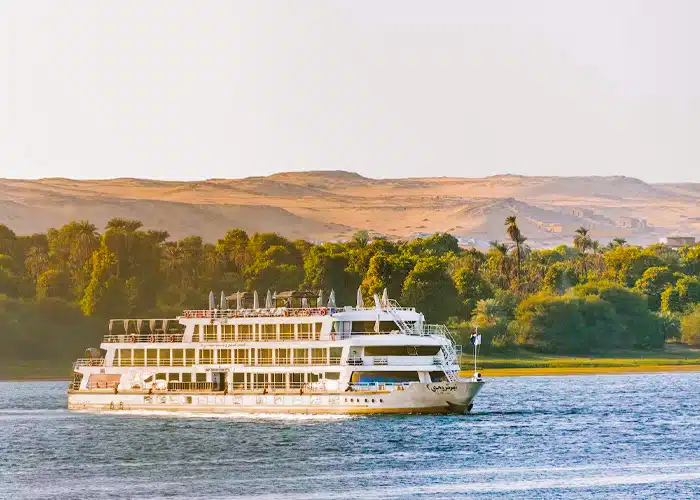
Quick Answer
A Luxor to Aswan cruise typically runs 4 to 7 nights and visits Karnak Temple, Luxor Temple, the Valley of the Kings, Edfu Temple, Kom Ombo Temple, and Philae Temple in Aswan. Most itineraries include an Egyptologist guide, daily shore excursions, and all meals onboard. The route covers roughly 230 kilometers of the Nile through Upper Egypt.
Most people book a Nile cruise without knowing which direction actually gives them a better experience. South-to-north or north-to-south they assume it’s roughly the same either way. It isn’t.
The difference comes down to pacing and how the monuments land emotionally. Luxor-to-Aswan follows the route of the ancient pharaohs’ trade routes, starting where Egyptian temples are densest and pushing south toward the quieter, more dramatic landscape of Nubia. The order you see things in changes how they feel arriving at Karnak on day one, when you still have genuine wonder left, hits completely differently from hitting it after five days of ruins.
Practical upside: Luxor to Aswan cruises hit all the major stops without making you choose. Karnak and the Valley of the Kings up front. Edfu and Kom Ombo are in the middle. Philae Temple is the southern finale.
What the Luxor to Aswan Route Looks Like in Practice
Days One and Two: Luxor and the West Bank
Luxor holds the heaviest concentration of ancient monuments anywhere on earth. The East Bank alone runs two full temple complexes: Karnak, which took more than 2,000 years to build, and Luxor Temple, sitting right on the corniche and lit dramatically after dark. Day two is typically the West Bank.
That’s where the pharaohs buried themselves. The Valley of the Kings has 63 known royal tombs, including Tutankhamun’s KV62, the one Howard Carter found in 1922, still largely intact after 3,300 years. Close by: Hatshepsut’s Mortuary Temple at Deir el-Bahari, which is worth the stop, and the Colossi of Memnon, two enormous sandstone figures now standing in a field where a mortuary temple once was.
You cover a lot of ground in 48 hours. But it doesn’t feel rushed, because your ship stays docked at Luxor the whole time. You’re not moving yet, just exploring.
Days Three and Four: Edfu and Kom Ombo
Edfu Temple is the best-preserved temple in Egypt. Full stop. It was buried under desert sand until the 19th century, which is exactly why it survived. The entrance pylons run 36 meters tall. The carved reliefs inside show religious texts and ritual ceremony in extraordinary detail. This is what most temples on the route would have looked like 2,000 years ago, before exposure did its work.
Kom Ombo comes the same day or the next morning. It’s a strange temple dedicated to two gods simultaneously, Sobek the crocodile god and Horus the Elder, with a perfectly symmetrical floor plan that mirrors itself down the center axis. There’s also a small crocodile museum on the site. Give it 20 minutes if you’re at all curious about how the ancient Egyptians worshipped these animals.
By the time you reach Kom Ombo, the landscape has changed noticeably. The flat agricultural plains around Luxor are gone. The Nile narrows. The desert gets drier and more dramatic. The light in the afternoon here is different from anything you’ll see in the north.
Aswan: The Final Stop
Aswan doesn’t feel like the rest of Egypt. Quieter, cleaner, more Nubian in character, the markets sell things you won’t find in Luxor or Cairo; the food is different, and the color palette of the buildings is brighter.
The main monument is the Philae Temple, dedicated to the goddess Isis. It sits on an island in the reservoir created by the Aswan Low Dam, and you get there by motorboat. The High Dam itself deserves a brief stop just for sheer scale: 3.8 kilometers wide, completed in 1970, responsible for creating Lake Nasser. Some cruises also include the Unfinished Obelisk as a massive granite piece abandoned in the quarry around 1500 BCE when a crack appeared in the stone mid-cutting.
How Long Should You Book?
I’ve seen plenty of travelers finish a 4-night cruise and immediately wish they’d booked 7. The 4-night itinerary covers everything above but keeps the pace tight as you’re moving fast between sites, and the ship is sailing most nights.
A 7-night cruise is the right call for first timers. You get the full itinerary, at least one free morning in Aswan to explore on foot, and actual time to sit on the sun deck between stops rather than just sleeping onboard.
- 4 nights: Covers Luxor, Edfu, Kom Ombo, and Aswan at pace
- 5 nights: Adds breathing room between major sites
- 7 nights: Right call for first-time visitors and travelers over 60
- 8 to 14 nights: Lake Nasser extensions and Dahabiya sailboat options
What’s Included and What Costs Extra
Most Luxor to Aswan cruise packages includes accommodation, all meals onboard, and an Egyptologist guide for shore excursions. What usually isn’t included: entrance fees to individual monuments, optional balloon flights over Luxor, airport transfers, and gratuities.
That last point catches people off guard. Most clients don’t find out about the monument fee structure until they’re standing at the Valley of the Kings entrance. The site charges separate entry for the Valley itself, then additional fees for specific tombs including Tutankhamun’s. Budget around USD 50 to 80 per person per day for monument fees, depending on how many optional tombs you add.
Sort airport transfers before you arrive. Luxor and Aswan are small cities, but the airports aren’t particularly central, and trying to negotiate a taxi fare on arrival after a long flight is genuinely stressful. Many cruise operators include free transfers when you book direct that’s worth checking before you compare base prices.
Frequently Asked Questions
What is a Luxor to Aswan cruise?
A Luxor to Aswan cruise is a multi-day sailing trip along the Nile River in Upper Egypt, travelling south from Luxor to Aswan. The route covers roughly 230 kilometers and stops at Edfu, Kom Ombo, and Aswan along the way. Most packages run 4 to 7 nights and include accommodation, meals, and guided excursions.
How does a Luxor to Aswan cruise work?
You board in Luxor, usually in the afternoon. Excursions run in the mornings and late afternoons to dodge the midday heat. The ship sails overnight or during afternoon rest periods, so you wake up at the next destination. Meals are served onboard, and an Egyptologist guide takes the group to each temple.
What’s the difference between a Luxor to Aswan cruise and an Aswan to Luxor cruise?
Direction and pacing. Luxor to Aswan front-loads the densest monument concentration and finishes in the quieter Nubian south. Aswan to Luxor does the reverse, some travelers prefer it because it ends with the grandeur of Karnak. The temples are identical either way; only the order changes.
Who should book a Luxor to Aswan cruise?
Anyone interested in ancient Egyptian history, archaeology, or photography will get real value from this route. The cruise format suits travelers who find constant hotel check-ins exhausting, families with older children, and older travelers who appreciate having everything in one place. The pace is manageable rather than grueling, and air-conditioned ships make the heat tolerable.
How do I choose the right Luxor to Aswan cruise?
The main decision is between standard, deluxe, and luxury tiers. Standard boats are clean and functional. Deluxe adds larger cabins and a better buffet. Luxury gets you private balconies, à la carte dining, and smaller passenger numbers. After that: check whether the Egyptologist guide speaks fluent English, whether entrance fees are included, and what the cancellation policy covers.
