
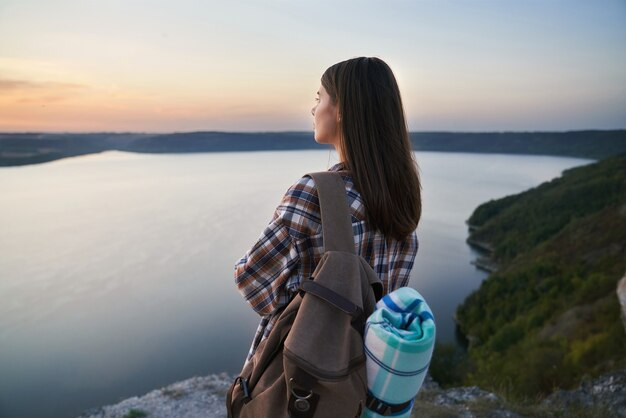
There is a specific kind of excitement that comes with deciding to take your first solo travel trip.
It’s different from the excitement of planning a trip with friends or family. It has more electricity to it. More possibility. And if you’re being completely honest with yourself — a little more nervousness too. Because this one is entirely on you. The decisions, the planning, the navigation, the unexpected moments that no trip ever manages to avoid entirely.
All of it is yours. Which is exactly what makes it extraordinary. And which is also why going into it well-prepared — not over-planned, but genuinely ready — makes the difference between a trip that lives up to everything you were hoping for and one that spends too much energy on problems that better preparation could have prevented.
Here is what you actually need to know.

Start With the Destination That Matches Where You Are Right Now
The most common mistake first-time solo travelers make is choosing a destination based purely on where they want to go eventually rather than where they’re genuinely ready to go right now.
There is no shame in this assessment. It’s honest self-awareness applied to travel planning — and it produces better outcomes than the alternative.
If you have never traveled internationally alone, starting with a destination that has strong tourist infrastructure, English widely spoken, and a well-established solo traveler community gives you the experience of solo travel in conditions that are genuinely supportive of a first-timer. You build confidence. You learn how you travel alone. You discover the things that matter to you when nobody else’s preferences are in the equation.
From that foundation, the more ambitious destinations become genuinely accessible rather than anxiety-inducing. The solo traveler who spent a week in Portugal or Costa Rica before attempting Southeast Asia or Japan arrives at the more complex destination with a reference point that makes everything more manageable.
Choose the destination that’s right for where you actually are — not where you’re planning to be eventually.
Plan the Foundation and Leave the Rest Open
Here is the tension at the center of good solo travel planning — and getting it right is genuinely important.
Too much planning kills the spontaneity that makes solo travel what it is. The whole point of traveling alone is the freedom to follow your own instincts and respond to what’s actually in front of you rather than executing a predetermined itinerary. Over-plan and you’ve simply replicated the structure of group travel without the company.
Too little planning creates stress that consumes the energy and attention you want to be directing at the experience itself. Arriving in an unfamiliar city without confirmed accommodation, without a clear plan for getting from the airport, without any orientation to the area you’re staying in — this is the version of spontaneity that produces anxiety rather than adventure.
The right approach is planning the foundation thoroughly and leaving everything else genuinely open. Flights booked and confirmed. Accommodation arranged for at least the first few nights — long enough to get oriented without committing the entire trip to a single area. Transportation from the airport sorted. A general sense of the neighborhood you’re arriving in.
Everything beyond that? Let it unfold. That’s where the best parts of any solo travel experience tend to live.
The Safety Mindset That Lets You Relax
Solo travel safety is a topic that gets either over-discussed in ways that make solo travel sound terrifying or under-discussed in ways that leave first-timers underprepared. Here is the honest version.
Traveling alone is safe — in the vast majority of destinations, the vast majority of the time — when you apply the same practical awareness you would apply to any unfamiliar environment. This is not a different category of risk from everyday life. It is everyday life in an unfamiliar context, which means your existing common sense applies.
Keep someone at home aware of your general itinerary. Not a minute-by-minute update schedule — just a general sense of where you are and where you’re going. Check in occasionally so they’re not concerned.
Be aware of your environment in the way that any traveler in any city should be. Know the neighborhood you’re staying in. Be thoughtful about when and where you’re exploring alone, particularly after dark. Trust your instincts when something doesn’t feel right — those instincts exist for good reasons.
Stay connected. A local SIM card or an international data plan means you’re never more than a few seconds from a map, a translation tool, or a way to reach someone if you need to. This single practical detail removes a significant amount of travel anxiety for most first-time solo travelers.
Work With Someone Who Knows What They Are Doing
This is the piece of solo travel advice that gets the least attention and deserves significantly more.
First-time solo travelers frequently try to handle every element of trip planning independently — flights, accommodation, transfers, activities, insurance — in a process that is more time-consuming, more stressful, and ultimately less reliable than the alternative.
Working with an experienced travel planner who specializes in creating personalized travel experiences handles the logistical foundation of your trip with professional expertise — finding the right accommodation for a solo traveler in the right location, arranging transfers that work for your arrival time, building the structural elements of the trip in ways that create genuine confidence before you arrive.
What this gives you is not a loss of independence — it’s the opposite. When the logistics are handled by someone who knows what they’re doing, you arrive at your destination with the freedom to focus entirely on the experience. Not on whether the accommodation is actually as described or whether the transfer is going to show up.
The experience is the point. Good planning is what protects your ability to have it.
The Thing About Traveling Alone That Nobody Tells You
Here is what experienced solo travelers almost universally report when they reflect on their first trip.
They were more capable than they thought they were. The challenges that felt intimidating in advance were manageable in reality. The moments of uncertainty resolved themselves through a combination of resourcefulness, flexibility, and the genuine willingness of strangers in most parts of the world to help someone who’s clearly navigating something unfamiliar.
And somewhere in the middle of all of that — somewhere between the morning they woke up with nowhere specific to be and the evening they found themselves in a conversation they never could have planned — they understood what solo travel actually is.
It’s not a logistical challenge to be solved. It’s an experience of yourself in the world that nothing else quite replicates.
Go find out what that feels like. You won’t regret it.
